Editor’s Note: The team of Nevada Business Magazine would like to extend condolences to the family and business connections of Bryan Keller of Rubin Brown who passed away unexpectedly after press time for the December issue.
The way Nevada does business has been altered by AI and perhaps no industry will be more impacted than accounting. An industry based off research, number crunching and analysis is being confronted with a mammoth of capability in AI that is changing the industry forever. Amid questions about how AI will impact the field, CPAs are also navigating challenges in public perception and succession, among others.
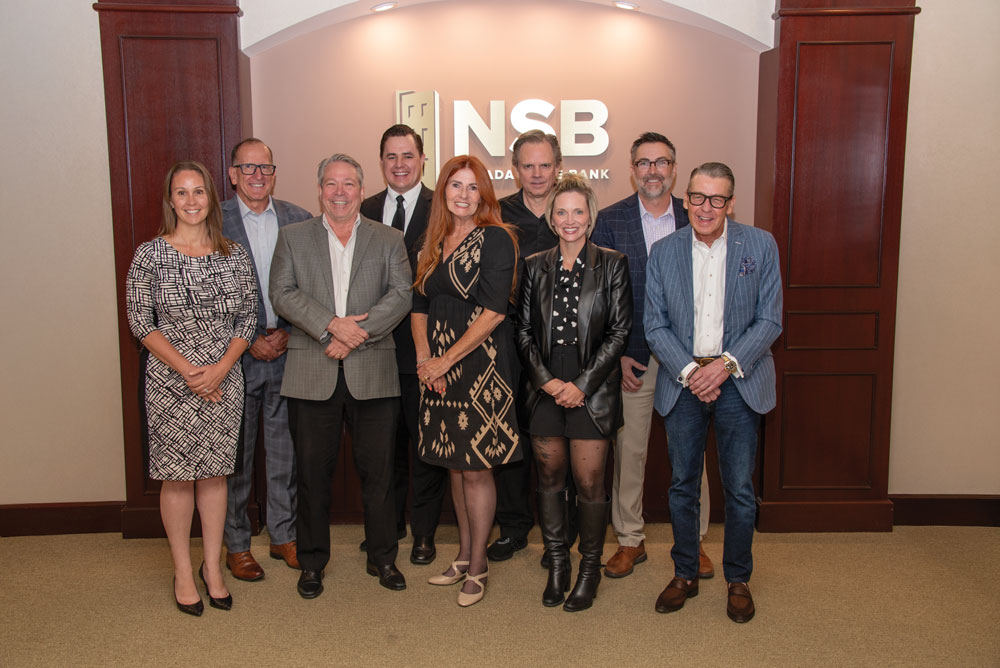
Recently, a group of CPAs met at a roundtable sponsored by Nevada State Bank to discuss the future of their industry and the challenges it faces. Connie Brennan, publisher and CEO of Nevada Business Magazine, served as moderator for the event. These monthly roundtables bring together different industries to discuss issues and solutions.
How Does the Public Perceive This Industry?
Jacqueline Matthew: When you tell someone you are a CPA or an accountant, they respond by telling you their sister is an accountant because she works at a gas station and enters receipts, or they will say you are really good at math. Nobody knows what we do.
Amber Baker: We are sometimes called financial advisors as well in passing with what we do for our profession. But we work with financial advisors to partner with clients to figure out their whole financial plan including saving and investing as well as the tax implications.
Baker: CPAs and financial advisors have different credentials. A financial advisor managing funds or investments and securities is going to have very different credentials than we have. I am sure someone out there has all of them and likes to play both of those, but I think most of our clients have a financial advisor who advises. But they work hand in hand together.
Matthew: CPAs tend to have a lens that looks both historical, current and forward where a financial planner tends to be a little more forward-focused, primarily. It is a different lens. But we work together. CPAs are also more focused on compliance for our clients and making sure that they do what they need to do in terms of the IRS or audit requirements and that is not so much what a financial planner would be considering.
Michael Clark: The population is not generally in tune on a lot of things that they do not have to deal with very often. For example, what does the taxpayer advocate’s office do? If you have never had to deal with those guys, you have no idea what to do with them. You will make up something that seems to make sense. The general public that has no need for a CPA does not really have the correct perception of what you do.
Daniel Gerety: Business owners have an idea of what we do, but not the general population. They have no idea. But the business owners and entrepreneurs do because they are working with CPAs and are relying on them and their involvement in mergers and acquisitions, selling business, or buying businesses. We are in the middle of it with the attorneys. I go to meetings with my clients and their financial planners. We sit down and the financial planner proposes something, and my client wants me to analyze it.
How Difficult Is It to Work With the IRS?
Clark: When we call the IRS, there is oftentimes a 90 minute or longer wait time and so it is usually faster to do what we need to electronically. But a lot of times, we need to talk to somebody there. We call them and sit on hold and try and take care of work while we are waiting. It is pretty annoying. Especially when you finally get through and some rookie that does not know how to answer the question picks up and then puts you on hold for six minutes. Then they come back on the line and put you on hold for another six minutes. It is very difficult to work with them. Especially since they have lost their knowledge base to retirement and are handcuffed by having to hire new people and get them up to speed.
Bryan Keller: It takes a long time to get to the right person that actually knows what they are doing. It can take weeks to eventually get kicked up high enough where you are in contact with an attorney or CPA that knows exactly what the issue is. But it takes forever to get there. It has not gotten any better in the last year. It is tough to deal with them.
Zachary Tompkins: It seems like there is still backlog from COVID. We have identity theft cases that have taken almost 700 days for them to get through. Once it gets escalated to a taxpayer advocate, things start to move a little bit better. But even then, they are still being stalled out.
Baker: We still have ERC (employee retention tax credits) credits that have not been paid to business clients, which is wild. Right now with what is going on in the economy and the world, people are a little more on edge and less decided to send money to the IRS. They might have it, too. They just want to wait till the 11th hour.
Gerety: The IRS is also sending incorrect stuff out. For example, there are trusts that had paid all their estimates properly, yet they sent out notices that they had underpayment of estimated tax penalties. My own personal trust got one. Then they recognized their mistake and said they were going to fix it and then sent out notices of levy to all those trusts. I got a notice of levy on my trust. They knew it was an error so why are they letting the computer send out levy notices?
Keller: When the IRS starts using AI it is going to be bad.
Matthew: If they do, we should be very afraid. But if they are still on floppy discs, we may have some time.
Baker: They also still use faxes so at least we are okay for a little bit.
Keller: Think about how many audits there will be once AI is implemented because you will not be able to fool it. They will not need a bunch of agents. I am worried about that from a tax standpoint, but they are not there yet. The IRS is so antiquated right now, but I do think that is coming.
Gerety: The IRS is underfunded. They fired their technology staff and now they are understaffed. It is a combination problem. Congress has gutted them.
Keller: There are still Congress people who want to abolish the IRS. They are understaffed and underfunded. It is hard. They will hire anybody. Anybody can be an agent. You do not need an accounting background. That is why, at the lower levels, it takes forever to get to somebody.
How Will AI Ripple Through This Industry?
Chris Wilcox: The biggest challenge that I see coming for the CPA profession is artificial intelligence. We have got to figure out how to utilize it because that is going to lead to the second biggest challenge, and that is artificial intelligence is going to take the jobs that the one, two, and three-year people do. Then we are going to be asking entry-level people to do work that we would typically have a four-year person do. We have to figure out how to turn our one, two, and three-year people into four, five, and six-year people and do it quickly because artificial intelligence has taken that work away.
Keller: The implementation of AI is going to change the profession rapidly over the next several years. Probably faster than we would like. We have a couple of big clients that have already eliminated sections of departments and implemented AI. They had jobs they had posted open, and they finally just eliminated all of them. There are some companies investing heavily already. The audit report and the tax return, which typically we viewed as value, is not going to be the value anymore.
Gerety: AI is a tool to use but you need to have the capability to make sure everything is correct. You have to make sure it is reviewed. Where I see a problem is because it will eliminate these beginning positions, how does someone get the experience to review what AI is coming up with when you have not done it yourself? For our younger accountants, my concern is how they are going to get the experience.
Keller: I do not necessarily think it will take our jobs away. The keys are going to be relationships and adding value. The people that would be vulnerable to losing their jobs are the accountants that do data entry. Those that understand the importance of networks and relationships and are actively trying to add value will be fine. But it is coming very fast and is going to change a lot.
Tompkins: A lot of our business is relationships. AI is not going to be able to replace the relationships we have as easily as maybe some of the work we do. As long as we stay on top of those and leverage AI to do our work more efficiently, that is where the industry will go.
Baker: The universities too, depending on what accounting programs are coming out of what universities are really going to matter because those are going to change significantly. The type of student they were putting out 10 years ago will be very different than the student they will be putting out 10 years from now. There will have to be some changes [in curriculum] outside of just learning the accounting standards and the tax regulations. Some part of it is going to have to respond to what is needed with all the change with AI.
Matthew: It may also reframe the profession a bit. Students sometimes go into accounting because the appeal is numbers, spreadsheets and working for yourself. Or at least that is the perception. But as our profession changes and becomes more about relationships and has an outward focus and those lower level tasks are taken over by technology, the faces around this table might look a little bit different in terms of personality traits and who is becoming an accountant.
Keller: It is almost like math skills will not matter anymore or any kind of analysis. It is going to be interesting.
Gerety: There have been actual studies done of groups who do not use AI compared to those that do use it but review it and then those that totally rely on it. The studies show that the brains of people who completely rely on AI are not developing like the other groups.
Keller: I have been doing this long enough to know when things change, you better embrace it, or it will run you over. AI is coming. And if you are smart, you are going to stay on top of it and learn along the way. And if you try to deny it, you are going to get run over.
Baker: It is really exciting to see what is happening for our profession and obviously a lot of other industries because of AI. There are way more exciting things that it can do and assist us with to serve all of our clients and even provide more creative ways to go about things. Hiring, scheduling, the chargeable hour could go away. The profession itself was really dry and not moving for a long time. And for us and the young people we have in our offices and even the ones coming up through school right now, this is what they want. This is what they are going to want and be drawn into the profession with. We need to be excited about it.
What Does Succession Look Like in This Industry?
Baker: We just retired all of our partners that were probably closer to their retirement age in the last five years over at CLA. And so now everyone at the firm is in their early to mid-forties. It was a huge task to quickly get in, understand their clients, transition their clients, make sure we are all up to speed, and make sure there is trust and relationship with these clients because they have been with some of these partners for 30 years. It was a very humbling experience to have to walk through.
Clark: There is definitely a lot of involvement between clients and the former principal. In my case, the principal is still around and still working, but it is not going to be forever. Everybody eventually ages out of the profession. It is going to end for all of us sooner or later. But she has been very helpful in trying to hand off clients. And in my case, I have some time to be able to do that, to be able to take over for her. But that is exactly the problem that I am trying to figure out – how to develop the next person to hand it off to.
Baker: The biggest challenge right now for CPAs in Nevada is succession. Making sure we have the right people in the right roles and making sure that they are technical enough to handle the clients is difficult.
Gerety: It is a challenge to find people that are smart enough to take over, that can manage clients, and that have both the technical knowledge and the personality to work with clients. The people that can think, do the research and are willing to do whatever it takes to solve our clients’ problems are unique individuals, and they are hard to find.
Wilcox: The human brain is different and if you are not writing, reviewing, or trusting the work, your brain is different completely. And with AI, we are not getting that growth. When you combine that with the fact that there are people around this table that are not going to be here next year, that is concerning. There is a lot of knowledge that I have, that is going to walk out the door when I retire. And it is the same with others. We have a succession of people who are leaving, and then AI is going to start to diminish or curtail some of the learning opportunities. That is like a perfect storm.
What Impact Has This Administration Had on the Industry?
Keller: Things have been way better. There will be significantly less audits. The prior administration was going to hire 80,000 [IRS] agents. And the tax bill, which really will not take effect until 2026, is pro-growth and pro-business for the most part. The last thing to get resolved are the tariffs. Once that is done, I am optimistic that certainly by the second quarter of 2026, the economy should be on fire.
Tompkins: I would agree that it is definitely pro-business. The state tax exemption being in the $15 million is going to be hugely helpful with the numbers and the size of things that people are dealing with nowadays. There are a lot [of benefits] as far as the high net worth goes. There is a lot of stuff that has phased out and is not really beneficial. But as far as that middle of the road, they are increasing the state and local tax deduction to $40,000. And so there are a lot of good things there. We will see how some of the new stuff as far as the overtime and the no tax on tips and how that plays out in terms of a tax return, but it will definitely be a new year.
Keller: No tax on tips is pretty significant, especially in Las Vegas.
Wilcox: The bill is a great bill. It is very business friendly, and it tried to fix some of the challenges that Biden never got taken care of. But the problem is that although it fixed them, the implementation was not thought out very well. A perfect example, is the research experimentation credit, the R&D tax credit. We had clients who could not afford to pay their tax bills because they had taxable income, which was driven by the disallowance of their R&D costs. Now that they need to take those R&D costs and they get to the deduction, it does not solve the problem back in 2022 and 2023 and 2024. It is way beyond the scope of this, but that is part of the challenge with that bill. It is a great bill, but the implementation was very poorly thought out.