From its earliest days, Nevada has been known for mining. Dubbed the “Silver State”, mining is a legacy industry that has kept the state prosperous over the past century and longer. The discovery of the Comstock Lode in Nevada’s Virginia Range in 1859 set the course for statehood while fueling innovation and economic development.
Today, mining in Nevada is at the precipice of a similiar moment as critical minerals are becoming, well, critical, to society from cell phones to car batteries. The modern age of technology requires critical minerals and Nevada is a vast resource for these materials.
The Governor’s Office of Economic Development (GOED) is at the forefront of this industry working with state agencies, regional development authorities (RDAs) and Nevada stakeholders to ensure the Silver State’s legacy industry is supported in producing the minerals needed to fuel economic development for the entire country.
Critical Minerals
Minerals are critical based on three factors: net import reliance, supply chain risk, and current or known deposits within the United States. In Nevada, over 30 are present.
“We have more critical minerals as defined by the Department of the Interior than most other states,” Tom Burns, executive director of GOED, said. “That’s an advantage we want to advertise.”
Nevada is currently the only producer of lithium in the United States and holds possibly the largest deposit in the world. In addition to lithium, Nevada is a leading producer of barite and antimony and tungsten mines have historically operated in the state, among many others.
“Nevada’s critical minerals were key for the federal government in the 1860s,” said Stephen Wood, director of strategy and public policy for GOED. “We are in that place again, where Nevada can step up and support the nation.”
Keeping it Local
“Nevada has both a breadth and depth of commercial-grade critical elements – so many of them in such a quantity that justify a commercial-scale response,” said Fred Steinmann, director of the University Center for Economic Development at the University of Nevada, Reno.
The expertise predates Nevada’s statehood. “The first time we had a big critical minerals discovery was the Comstock Lode in Virginia City,” Burns said. “Almost all the wealth created from those mines went to California. Not enough of it stayed in Nevada.”
Now, nearing two centuries later, he said Nevada “knows better.” The very first effort of GOED was the Tesla Panasonic Gigawatt Factory, Steinmann said. “To a degree it was viewed as a Hail Mary to diversify the economic base, but because of that gamble, we have a head start on the rest of the country.”
Following an initial $6.2 billion investment that created over 10,000 jobs, Tesla is now completing two facilities in Northern Nevada: one of the largest semi-truck manufacturing plants in the world and one of the nation’s largest lithium iron phosphate battery factories.
Now, Steinmann said, the state is in the unique position of building out “loops.”
The One and Only Lithium Loop
Mining, processing, manufacturing, and reuse of a critical material is a full “loop,” and closing it means centering all four stages within state lines. Opening in 2025, Redwood Materials’ recycling facility was the end of the “Lithium Loop” – and the first time that any state had achieved full control of a cycle.
This Lithium Loop makes Nevada the only state in the nation building a fully circular lithium economy within its borders. Recyclers like Redwood Materials have made plans to invest over a billion dollars into the area.
“Traditionally, mining happens in Nevada, and wealth generation happens somewhere else,” Wood said.
It’s not only other states, but other nations that finish the job. “We’ve been sending materials to China and just hoping they come back,” Burns said.
Less than 1% of global lithium comes from the United States making the country overly dependent on foreign countries.
This dependence is costly – every year, the mining economy passes up nearly $3 billion in value. Consumers are a large part of this loss: many day-to-day items use electronic components containing lithium, like laptops, cell phones, and electric cars.
However, it was national security risks that made lithium the focus. Battle tanks, planes, and other major pieces of military equipment need lithium composites. “We have seen both China and India manipulate international commodities by restricting or flooding the market,” Steinmann said.
Until now, the U.S. has been constantly at the mercy of foreign nations’ production, processing, or pricing, and that impacts consumers.
Thacker Pass
Lithium Americas is in phase one of an open pit mine and processing facility in Humboldt County: Thacker Pass. The project is on a large ore body with a high concentration of lithium. Lithium Americas plans to turn it into lithium carbonate for commercial-grade batteries.
“We’re helping to secure our country’s future energy supply,” said Tim Crowley, senior vice president of government and external affairs at Lithium Americas.
The lithium mine is a multi-billion dollar mining and processing facility backed by General Motors and a $2.26 billion loan from the U.S. Department of Energy. Once fully operational, the mine will produce enough battery-grade lithium carbonate annually to establish a domestic supply chain for the electric vehicle and energy storage markets.
Thacker Pass is also a major economic development driver for Humboldt County both during construction of the mine and with permanent workers after it’s complete.
Steinmann explained that right now, “there is only one commercial-grade active lithium mine operating in the United States, Silver Peak mine in Esmeralda County.”
It’s producing 40 tons of lithium per year, “a fraction of what Nevada is blessed with,” he said. Thacker Pass is set to easily surpass that.
“Phase 5 will be 160,000 metric tons of lithium – what the entire world produced in 2023,” said Robert Ghiglieri, administrator of the Nevada Division of Minerals.
There are 1,000 temporary workers with plans to double in the coming months. Permanent jobs are also coming. “Our long-term workforce will be about 350 people,” Crowley said.
Hopefully, 350 Nevadans. “We want to hire locally – not only because it’s good for the state, but it’s good for us,” he said
Thacker Pass is home to high concentrations of lithium. The mine itself will only encompass 1,000 acres but will increase U.S. domestic output by 10 times. This small section is estimated to take 45 years. “We won’t see the end for several generations,” Crowley said. “And we want people who will stay here for it.”
That means keeping Nevadans here. “We weren’t just losing dollars,” he said. “Students graduating with chemical engineering degrees were going in droves to Texas to work in oil. Now, we don’t have to export our talent.”
Getting to Work
One of the barriers to development of the Lithium Loop has, historically, been labor according to Steinmann. He explained, “Companies were eager to create new operations or expand, but were limited by trained, skilled, and experienced employees.”
For Nevada’s rural communities, these jobs were (and are) everything. “Mining is the largest employer,” Ghiglieri said. In some rural communities, mining constitutes over 50% of the local workforce.
It’s also one of the highest paying, with an average salary of $120,000. “Roughly 80% more than the state average […] across the supply chain,” Amanda Hilton, president of the Nevada Mining Association, said.
Nevada has nearly 15,000 direct mining jobs and over 2,000 additional vendors operating across 16 of the state’s 17 counties according to the Nevada Division of Minerals.
Of course, mining looks a little different than it used to. “You might think of miners as people with shovels going underground, but that is the farthest thing from the truth,” Ghiglieri said.
Each component of the profession, from construction to analysis, is incredibly sophisticated. “Entry-level positions require some level of training and understanding in geology, heavy equipment operation, and manufacturing,” Steinmann said.
Many miners are engineers, particularly chemical. “We’re building a lithium mine, but at our core, we’re a chemical company,” Crowley added.
Students prepare for the mining industry by taking difficult, comprehensive coursework. They spend their careers expanding their knowledge and becoming experts in advanced technologies.
It’s a rewarding but demanding career and more workers are always needed.
The issue is exacerbated by the retirement cliff. “Half of our workforce is expected to reach retirement age by 2030,” said Hilton. “Attracting new talent to the industry [is] a critical issue.”
Colleges like Great Basin, Western Nevada, Truckee Meadows Community, and other rural colleges are a lifeline. GOED’s WINN Fund has active workforce training programs in these colleges to upskill and reskill Nevadans to fill the gaps in workforce for companies who need specific skill sets.
The Tech Hub – a coalition of stakeholders invested in the lithium economy – was an “aggressive” approach to expand training programs as well, Steinmann said. UNR’s Tech Hub initiative is a consortium of government, industry, education and nonprofit organizations that have aligned to leverage critical mineral resources. The initiative receives $21 million from the U.S. Economic Development Administration (EDA) as well as state, private and local matching funds.
Great Basin has relied on Tech Hub and GOED WINN Fund dollars for its innovation. “We developed programs to fit the mining industry and lithium specifically,” Amber Donnelli, president of Great Basin College, said.
The Great Basin College – NORCAT Mine Skills Training facility (another WINN Fund project) in Elko is a prime example of these prioritized workforce initiatives.
It added an industrial building and relocated its diesel, industrial, electrical, and instrumentation maintenance programs to a 10,000-square-foot building in Winnemucca. “We could really use 20,000,” Donnelli said.
The coursework continues to expand. Great Basin is in the process of standing up another commercial driver’s license course for lithium transportation.
“If you’re looking for opportunity, come to rural Nevada,” Donnelli said. “You can receive a fantastic education and get right to work.”
Nevada lithium jobs are currently growing at twice the national average.
Graduates from Great Basin really do get jobs quickly, thanks in part to industry partnerships. Cohorts from mining companies come to Great Basin specifically for these classes.
“Twelve mining partners came together to give out scholarships, $6,100 per kid, along with a paid apprenticeship program,” Donnelli said.
It’s a Process
With a larger workforce, the next step is replication. Nevada’s ability to deliver a domestic loop across elements is an asset that Steinmann said is relatively unique.
Right now, for Nevada, the buck stops at the sifting stage for a variety of minerals. “If we stop mining copper here, it doesn’t mean we can’t process copper from Arizona,” Wood said. “We want to be the place where everything happens.”
There are two boron deposits in North America: one in Death Valley and another in Rhyolite Ridge. The Nevada site, once up and running, plans to produce 20% of the world’s boron for an estimated 50-year lifespan.
Boron has many applications. For example, it can make steel ten times stronger than before it was treated and can make glass “spider” rather than shatter. “While we have the product (boron), we’ve lacked in processing – both on the state and national level,” explained Burns.
Diversification
Regardless of if its extraction, processing or recycling, people are dependent on it.
Hospitality and tourism need construction, which in turn is beholden to minerals. Nothing is as dependent, however, as defense. “From being a subcontractor for a military base to working with drone manufacturers and autonomous flying vehicles, the defense industry is a natural partnership for mining,” Burns said.
GOED has engaged with the Departments of Energy, Defense, and Commerce for funding and resources, and remains in “constant communication.”
It’s not just the mining industry itself, but what it does for Nevada overall. “Minerals tax is up to 5% of the net proceeds with half going to the county that produced the product,” Ghiglieri said.
That 2.5% in Winnemucca, Esmeralda, and other primarily rural counties goes a long way. In 2024, mining counties earned nearly $100 million in tax revenue. “We anticipate the 2025 numbers to be higher,” Ghiglieri said.
This hasn’t meant only an influx of cash for these areas, but fuller communities. “Don’t overlook the economic impact,” Burns said. “The people that work in [mines], they also buy breakfast at the diner, send kids to schools, and go to the doctor. The secondary jobs are the ripple effect that create economic prosperity.”
The more employees, the more customers local barbershops and real estate agents and grocery stores have – which, for small towns, is often make or break.
The tax dollars go further still. “The other half of that 5% tax goes into the state education fund,” Ghiglieri said. He added that mining taxes fund education in all counties of Nevada.
Innovation
While existing communities grow, Karsten Heise, senior director of strategic programs and innovation for GOED said, “This momentum in critical minerals is bringing new players to the field. Innovation often originates and is driven within startups. In building out the supply chain, early-stage, high-growth, deep-tech companies are generating the technologies we need to build out a complete supply chain.”
From extraction efficiency to water-saving processing, to characterization and development of new materials, Heise said young companies are leaders in providing new solutions. “We can attract national and global entrepreneurs to build their companies in Nevada and become suppliers to original equipment manufacturers (OEM),” he explained.
Critical and new materials are often used in defense technologies. “Nevada has major air force bases, is one of nine FAA test sites for drones, and defense platforms require components containing critical materials such as motors, magnets, and lithium-based batteries,” Heise said.
Nevada’s universities have also played a key role in supporting innovation. One example of this is the role of the Knowledge Fund, a state-backed grant program managed by the Governor’s Office of Economic Development (GOED). The fund is specifically designed to translate university use-inspired research conducted at UNR, UNLV, and DRI into new cutting-edge products and is serving as Nevada’s primary mechanism for fostering a technology-driven, diversified “innovation economy.” The fund focuses on turning discoveries into viable commercial end products, spinning new companies out of Nevada universities, and all this is generating high-paying tech jobs which in turn creates other jobs at a multitude of five to one. “The Knowledge Fund supports translating research from lab to market, and ties what’s going on at UNLV and UNR to the private sector,” Heise said.
The SAGE (Sierra Accelerator for Growth & Entrepreneurship) program is another Knowledge Fund supported initiative which directly serves Nevada’s small technology-based small businesses at the university level to help them in with obtaining competitive grants or contracts from the U.S. Small Business Innovation Research (SBIR) and the Small Business Technology Transfer Research (STTR) programs.
GOED also applies innovation principles in developing solutions for workforce development such as the Individual Career Mapping (ICM) program. The ICM is an initiative within which participants use immersive virtual reality (VR) “field trips” to simulate real-world, in-demand jobs, including those in the mining industry for career exploration. This lets potential workers “try on” a career virtually which breaks down misconceptions and sparks curiosity about the field and Nevada’s high demand industries. To this other components such as the national career readiness credential (NCRC) are added.
Where’s the Money?
Why isn’t every loop completely operable? The tax and regulatory structures are in place, the public land, and the employment pipelines are set. “What’s keeping projects from penciling now is cash,” Wood said. “I can’t understate how expensive every point in this process is. Without federal investment, it doesn’t work.”
It’s the same in education. “We’re looking to the federal government to help us with seed money,” Donnelli said.
Hopes to implement more manufacturing and autonomous training and move into bigger buildings hinge on this money, she said. It’s an “all hands” situation – the state has initiated tax incentives and private firms continue to contribute to the efforts – but the federal government has the deeper pockets.
Of course, there’s risk. “We have no revenue,” Crowley said. “We don’t have another project in the world where we’re generating cash and applying it here – we’ve had to borrow everything.”
Colleges are seeing that cash strain, too. “Right now, there’s no lithium coming out,” Donnelli said. “When there’s lithium, there’s money.”
Funding delays are also born of timing concerns. “We have deposits of several critical minerals that are vital to our domestic needs, but that doesn’t mean we can start mining those tomorrow,” Hilton said. “On average, it takes three decades to fully permit a mine.”
The Long Road
The solution to questions of funding and timing is the same to those of workforce and technology: innovation and cooperation – what Nevada is primed for.
“We’re working with regional development authorities, counties, cities, the private sector, and governments in the mineral space to diversify our economy,” Steinmann said. “The data shows Nevada’s strength of consistency of collaboration amongst various partners, whereas in other states, there’s intense competition. There’s an understanding across the public, private, and nonprofit sectors that if we want a diverse, strong economy, we must work quickly and together.”
Nevada’s work in the critical minerals space is accelerating, and capitalizing on this once-in-a-generation opportunity is essential to the state’s future. No other state in the U.S. has this level of coordinated governmental support, industry experience, ease of business operations, and technical and research expertise of a public R1 research university.
Just as Nevada once built entire communities around mining, the critical minerals ecosystem is forming the future, cementing it as both an economic engine and a career pathway for generations to come.
But there’s more work to do. To continue as a leader in driving domestic critical mineral independence, Nevadans must embrace both the opportunities and overcome the challenges that go with it. This is at the heart of what Nevada, the Battle Born State, has always done.
Parks and Recreation Make It Possible for Henderson’s Economy
How parks and recreation continue to support growth, business development and quality of life
When people think about economic development, they usually think about new companies, housing developments or major infrastructure projects. But in Henderson, one of the biggest drivers of growth over the last 30 years has been parks and recreation.
From neighborhood parks and trails to athletic fields and recreation centers, Henderson’s parks system has helped shape the City into one of the most desirable places to live in Southern Nevada. It has also become a major reason businesses, developers and families continue choosing Henderson.
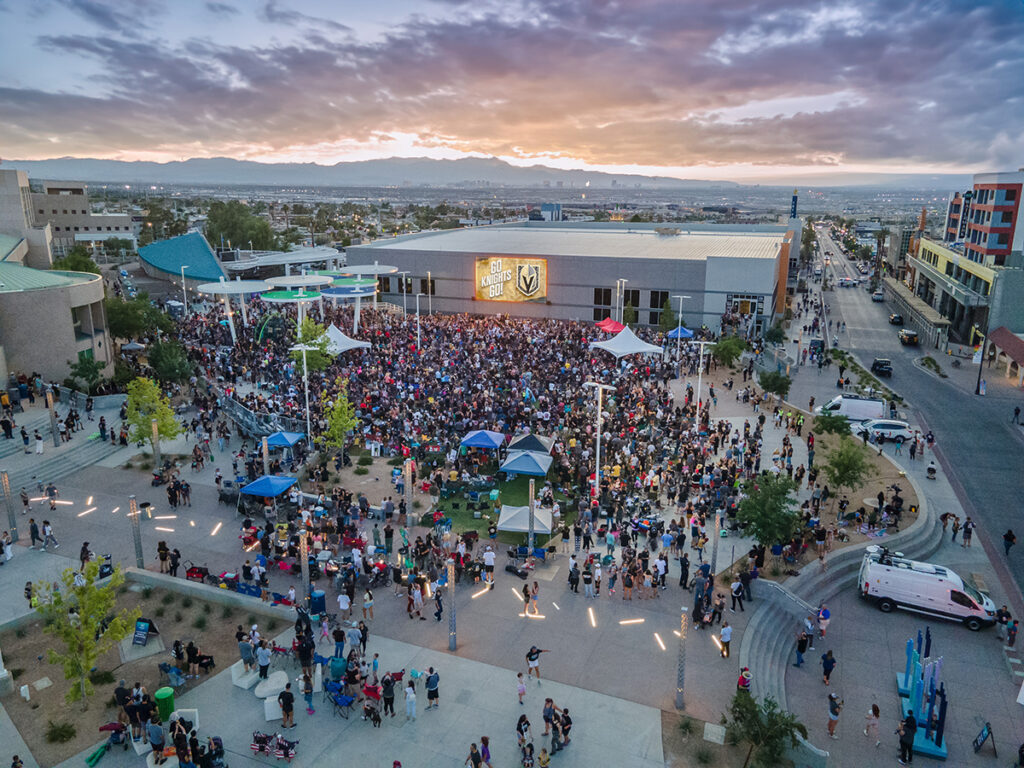
That growth has been supported by a dedicated parks and recreation property tax allocation first approved by voters in 1997. Today, that funding supports nearly 40 percent of the City’s parks and recreation budget and helps maintain 77 parks, more than 300 miles of trails, 105 athletic fields and recreation facilities across the City.
The upcoming Ballot Question No. 1 in the Primary Election on June 9 would continue that existing funding structure.
If the measure does not pass, taxes will not decrease. Instead, the funding would be redistributed elsewhere while Henderson parks and recreation would lose a significant portion of the budget that supports maintenance, staffing and operations.
Parks and Recreation Make It Possible for Business Growth
Henderson’s investment in parks and recreation has become part of the City’s economic advantage.
Companies looking to relocate or expand increasingly pay attention to quality of life when deciding where to invest. Employees want access to outdoor spaces, trails, youth sports and family-friendly neighborhoods. Businesses understand it is easier to recruit and retain workers in communities where people genuinely want to live.
That gives Henderson a competitive edge.
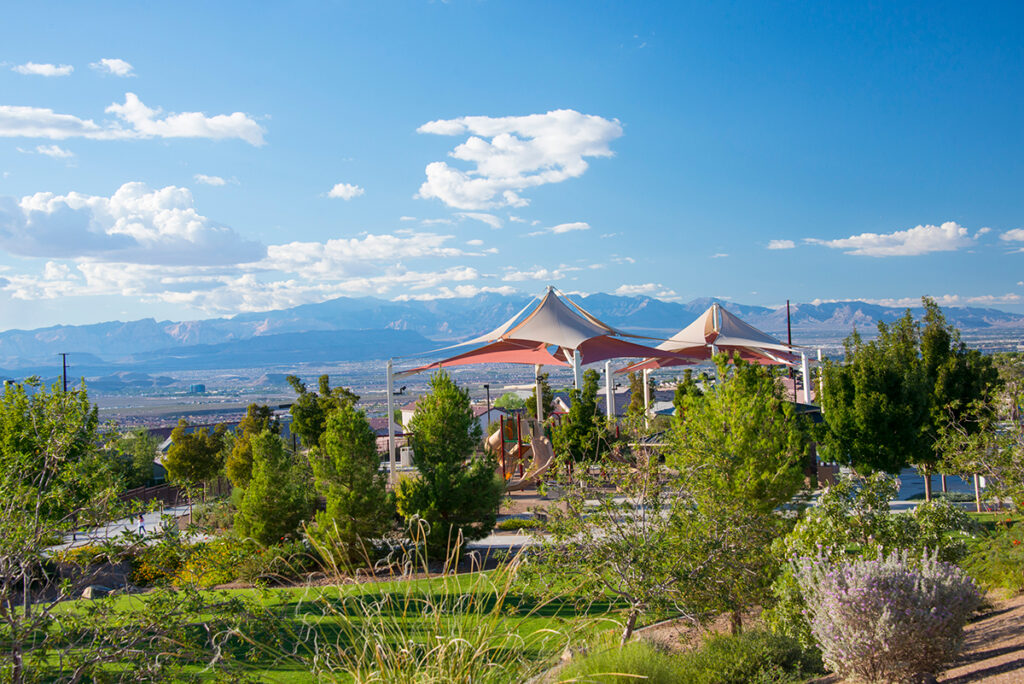
Developers building master-planned communities in Henderson know parks are not optional amenities. Families moving into new neighborhoods often ask about parks just as quickly as they ask about schools, restaurants and shopping centers.
Parks also help support property values and encourage additional investment nearby. Restaurants, retail and small businesses often grow alongside communities built around recreation and outdoor access.
Parks and Recreation Make It Possible for Workforce Retention
Quality-of-life amenities are becoming increasingly important for workforce recruitment and retention.
Trails, recreation centers and community parks help create the kind of environment businesses want for employees and families. Parks also serve residents at every stage of life, from youth sports and family activities to walking trails and recreation opportunities for seniors.
Today, approximately 85 percent of Henderson residents live within a 10-minute walk of a park, reflecting decades of planning focused on accessibility and community connection.
Those amenities help strengthen neighborhoods and contribute to Henderson’s reputation as one of the region’s most livable cities.
Parks and Recreation Make It Possible for Henderson’s Future
One reason Henderson’s parks system stands out is because the City has consistently maintained and improved it over time.
Older parks continue receiving upgrades and maintenance instead of being allowed to decline. That ongoing investment helps protect neighborhoods, preserve property values and maintain the City’s overall quality of life.
Without continued funding, maintaining that level of service would become more difficult over time.
Parks and recreation are no longer simply amenities. In Henderson, they are part of the City’s economic foundation — helping attract residents, support businesses and drive long-term growth.
As Henderson continues to grow, maintaining those investments will remain an important part of protecting the City’s future.