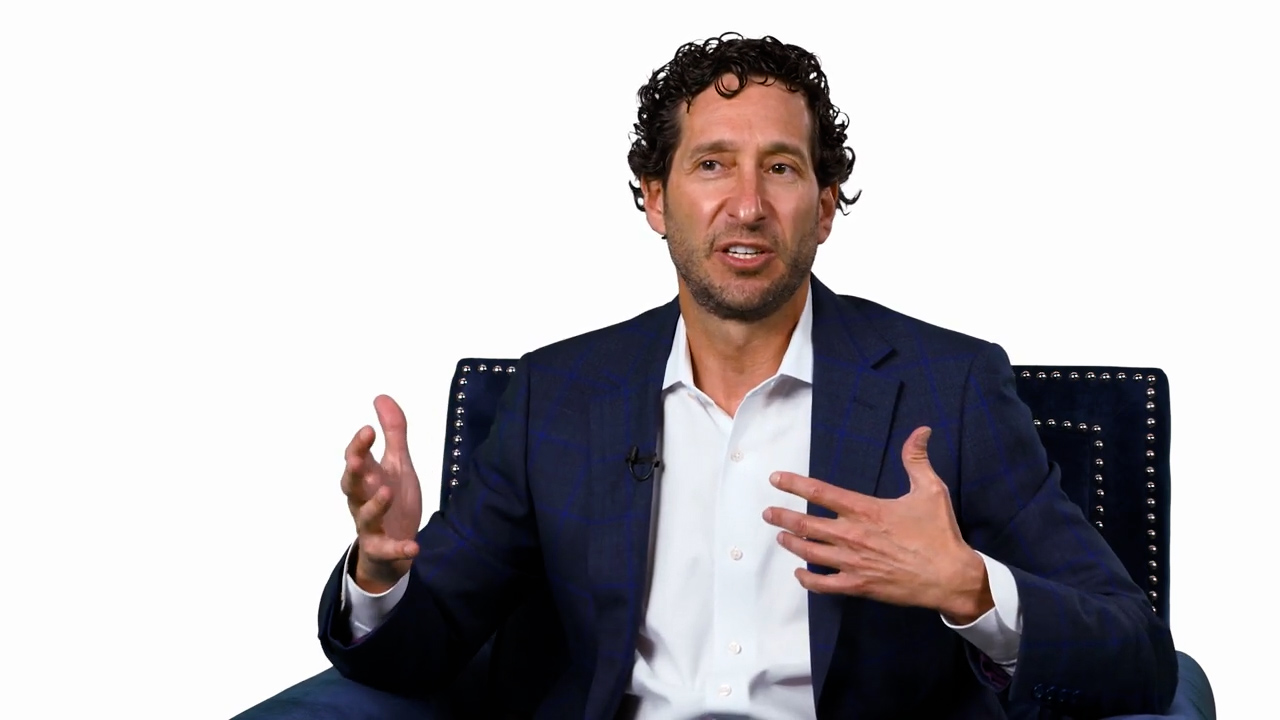
More often than not, the mining industry conjures images of dusty coal miners with pickaxes and mules leaving scared landscaping in their wake. However, modern day mining has become extremely sophisticated. And mining in Nevada is not only environmentally conscience but has become the gold standard for safe and effective mining. Recently, a group of mining experts met at a roundtable sponsored by City National Bank to discuss their industry including its challenges and its future in the Silver State.
Connie Brennan, publisher and CEO of Nevada Business Magazine, served as moderator for the event. These monthly roundtables bring together different industries to discuss issues and solutions.
Is Recruiting Talent an Issue?
Peter Richardson: Our biggest challenge is the talent pipeline and the lack of a skilled workforce, be it mechanics, electricians, welders or professionals. [We need workers in] everything from mechanical engineers to mining engineers.
Michael Deal: Retaining people and getting quality candidates [is our biggest challenge]. Generally, the mines are in more rural areas, and [recruiting candidates for] electrical engineering, mechanical engineering, reliability engineering, even operators and maintainers is challenging.
Richardson: The shortage is on all sides. It is difficult to find skilled miners and skilled mechanics.
Javad Sattarvand: We are at the front line of workforce development and finding quality students is getting harder and harder every day. This is not a challenge for Nevada [only]. The numbers are similar for all countries, even outside of the US. In the US, we have almost half the number of students that we used to have ten years ago, and it is declining in most of the schools. At UNR we have done some new activities to improve it and have doubled our enrollment compared to two years ago. But still we are far behind the numbers that we were ten years ago. And with the future vision of mining in this state coming to lithium and expanding the other mines, that is not the trend we should see. The shortage will be harder and harder in the future.
Deal: Making mining a priority is a challenge, even in universities. The number of mining schools are reducing significantly across the country. Promoting mining as a good field is a big challenge.
Robert Ghiglieri: [According to] the Department of Labor statistics in 2022, the average salary for the mining industry was $109,000.
Richardson: We have expanded our search area and are very engaged in employing people in southern Nevada. We start early. We have been engaging in local schools in southern Nevada at a young age and at high schools and offering different programs to get people interested in mining and giving them the opportunity to join us. We try to recruit as much as we can within Nevada, but we also recruit outside of Nevada and everywhere.
Corrado De Gasperis: Mining is science based. It is for the curious. It is for the problem solvers and it is exciting. The K-12 conversations should continue [to be about] not just what mining is, but how important it is, how technical it is, and how cool it is. It is cool and it is important. [We need to communicate that to the younger generation] and then we need to grow the pipeline.
Richardson: We must engage early. [It is important to] help educate Nevada to understand the importance of our business and what kind of opportunities we do offer, because we have a lot of great opportunities if you are a skilled laborer or if you want to be professional. It is not just mining engineers. We need people across the business. We need chemists, HR people and financial people. It is not just mining engineers. We need everyone.
Sheldon Mudd: Housing is a challenge to get up and running in rural Nevada. It costs more to build houses. It is more difficult. We have smaller builders and they do not have the capital necessary to put up large subdivisions and so forth. And some of their financing and bonding limits cut into that. I have talked to individuals from southern Idaho who took jobs in northeastern Nevada with a mining company [or with] other industries, and [they] tried to make it work but could not find a place to live and eventually went back to where they came from. We hear that repeatedly.
Tim Crowley: We have partnered with the northern Nevada building trades to build [housing for our workforce]. And we are going to lean on them to give us the skilled workers [we need], which at its peak will be 2,000 skilled workers in a very remote part of our state.
Mudd: The first domino that we have in rural Nevada is to tackle the housing issue [for miners] and then we can easily recruit people from northern Utah, southern Idaho, eastern Oregon, and people who are primarily from the agriculture industry. They know how to work, and they know how to work hard. They are not afraid of long hours. [Housing is the] cornerstone issue that will get that process started.
How Do Regulations Affect Mining in Nevada?
Mudd: [There is an] unpredictability of politics and policy at both the state and the federal levels [regarding mining]. And anytime there is a new legislature, new congress, [or] new administration at one of those levels, we are unsure of what that is going to mean from a natural resource’s perspective. It creates uncertain and inconsistent application of regulations. At any moment, that could shift how the industry operates and that is a big concern. We are going to run out of common sense long before we run out of resources when it comes to mining in Nevada.
Chad Yeftich: Federal permitting is a key obstacle here in Nevada. There is sort of bipartisan recognition of this issue, but it remains extremely complex.
Mudd: There are a lot of redundancies that exist within the permitting process. Our state BLM offices are good, but they operate within a system that has been so convoluted and scrambled. [For the] federal registry process, if you wanted to do an NOI (notice of intent) and publish that in the federal register back in the year 2000, a local field office could push that NOI out to the federal register and it would be published, and that was the process. But now, it has to be approved at the state level. And from the state level, it has to go to the federal BLM office and then it has to walk through [approximately] 27 solicitors in order to be approved. If you are a larger corporation, your lobbyists back in DC might be able to push that through in six months. But if you are one of the smaller operations within the state, you are lucky if you get that published in the next year and a half. [The process] has become exceedingly redundant and overwhelming. There are ways that we can definitely streamline it.
Ghiglieri: The biggest challenge from our perspective as a state agency is the constant education that we need to do with both local and federal legislatures on the importance of not doing mineral withdrawals. In the last few years under 900,000 acres were withdrawn. That is roughly over 28% of the federally managed lands have had mineral withdrawals that already happened within the state. We try to constantly [educate and] remind people that just because there is not a mine operation going on there right now does not mean that there will not be one in the future.
Justin Abernathy: A majority of the land in Nevada [has been identified] for multiple uses and they are competing uses sometimes. It can be challenging to find what the right balances of uses of the land are. Withdrawals do come into play in terms of reserving land for certain uses or to protect certain values. It is particularly complex in the mining industry because of the level of exploration that is required before you know whether an area is viable.
Ghiglieri: The great thing about Nevada is it is 86% federal land. And the worst thing about Nevada is 86% [is] federal land and everybody wants their own piece. On the federal land, there is the 1872 mining law and the right for any individual to go out and stake claim on open lands in those federal lands. Currently there has been a drastic increase of withdrawals towards eliminating areas of federal land that have been previously open for mineral entry. And this isn’t just due to wildernesses or national monuments, which do have a very large impact. There are multiple avenues for this to happen, and there is less and less opportunity for exploration companies and mining companies to go out, establish new areas, and start developing new resources.
Randy Miller: [Nevada] is fortunate to have the kind of resources that are so needed right now in our world. We have developed world class regulations in this state that people model all over the world and those regulations were developed with the industry. Every high school student that graduates here should have a strong appreciation for what Nevada has in terms of mineral resources, what we are doing to contribute to the world, and [know] that we are doing it in an incredibly responsible way.
Crowley: We all recognize that regulations are for the environment and the communities we are in and that [they are] absolutely necessary. We work in an environment where we have no idea when we are going to turn a dollar. And part of that is the uncertainty of the regulations, but they play an invaluable role. We have come so far from where we were in the 1860s because of good stewardship and collaboration with our regulators to do the job right. We must have good regulations.
What Role Does Technology Play in the Future of Nevada Mining?
Richardson: A lot of people have a perception of mining [as using a] pickaxe and shovel. [But] it [uses a] high level of technology. It is frontline technological.
De Gasperis: The innovation [of technology in mining] is now quickening. The use of physics based artificial intelligence, the use of hyperspectral imaging and predictive algorithms for mineral discovery and the use of AI for new material developments will create a lot of disruption and a lot of volatility in the industry.
Richardson: [In addition to] AI, we are also seeing a lot of automation and remote work. We have equipment already that we can run from afar, so we can run puckers and drill equipment from another workstation and not be on the equipment per se. And then the next step for that is automation. It is going to take a big change in management, both for leadership and for the employees. There is going to be another skill set [required]. We are still going to need people to run the equipment and maintain the equipment, but it is going to be different.
De Gasperis: If you are a material science company and you are not using physics-based AI to develop new materials, in five years, you are going to be not [just be] at a disadvantage, you are going to be a dinosaur. And if you are not using advanced sensing, hyperspectral imaging, and hopefully in the very near term, quantum sensing, atomistic detection and atomistic extrapolation and prediction, you are going to be a dinosaur.
Richardson: We are still going to need employees [even with automation]. We are just going to need another skill set for employees. We are going to need people, but the work is going to be different. You are not going to be sitting in every truck. You might be sitting behind a desk and running two trucks. And then there are going to be other people that have to maintain all the sensors, all the electronics and all the stuff that is needed to run the equipment and technology.
De Gasperis: Eighty-six percent of Nevada is federal [land]. It is also understood that two thirds of Nevada is undercover and one third is exposed. We have state claims without crops and visible structural anomalies that indicate minerals, but two thirds you can’t see with the naked eye. And we are withdrawing claims because there is no discovery. We are not going to find those other two thirds the old way. It is going to have to be the new way [with technology] and it is coming very fast. My concern is – is the industry equipped? Are the employees and technicians equipped? Is management aware of what is coming? It is coming very fast.
How Does the Mining Industry Contribute to Nevada?
Crowley: A mining operation pays sales and use taxes on the equipment that they buy. [If you consider a coffee shop buying] a cappuccino machine for $1,000, we are paying several million dollars for a truck and you need a fleet of 60 [or] 80. There is a scale there. And when you consider the payroll tax, which is another conventional tax in Nevada that everybody pays, [the mining industry] pays well over twice the state average. We pay property tax, and we are big land users and big landowners. You layer on top of that a specific tax just for mining. And then the precious metals industry came forward in 2021 and added yet another tax that goes to our education fund. The comparison of what [the mining industry] pays compared to all the other businesses in the state [is significant]. And we are not complaining. We are residents of this state and we are proud of it. We are proud of paying a disproportionate share for the things we use.
Yeftich: One of the great things about Nevada’s mineral endowment is that oftentimes it allows for application across different areas of the supply chain. Whether it be Rhyolite Ridge or Lithium Americas, we are not just mining, we are also processing materials and upgrading them. That means more jobs and more tax dollars.
De Gasperis: If we produce over 5 million ounces of gold a year from the state of Nevada, that is $10 billion of revenue. We would be maybe the fourth largest country in the world if we were a country in terms of gold production. I would like to increase awareness of that because there is a lot of industries that are starting to use precious metal more. Silver is becoming an industrial first metal versus a monetary metal. But gold is money. Nevada is important in terms of monetary policy and strategic reserves and should be elevated in terms of importance.
Miller: A long time ago, the mine sites were driven by some very important things in our country, like wars that we were involved in and things of almost an emergency nature [such as] trying to access minerals that were critical [at the time]. In a lot of ways, I see that is where we are now. We are so lucky that we have the minerals [in Nevada] and the regulations to do it responsibly. And those partnered together are a unique situation in the world. It is not like that everywhere. People need to know and understand how far we have come in Nevada with how we are responsibly mining at this time.