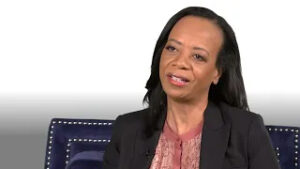
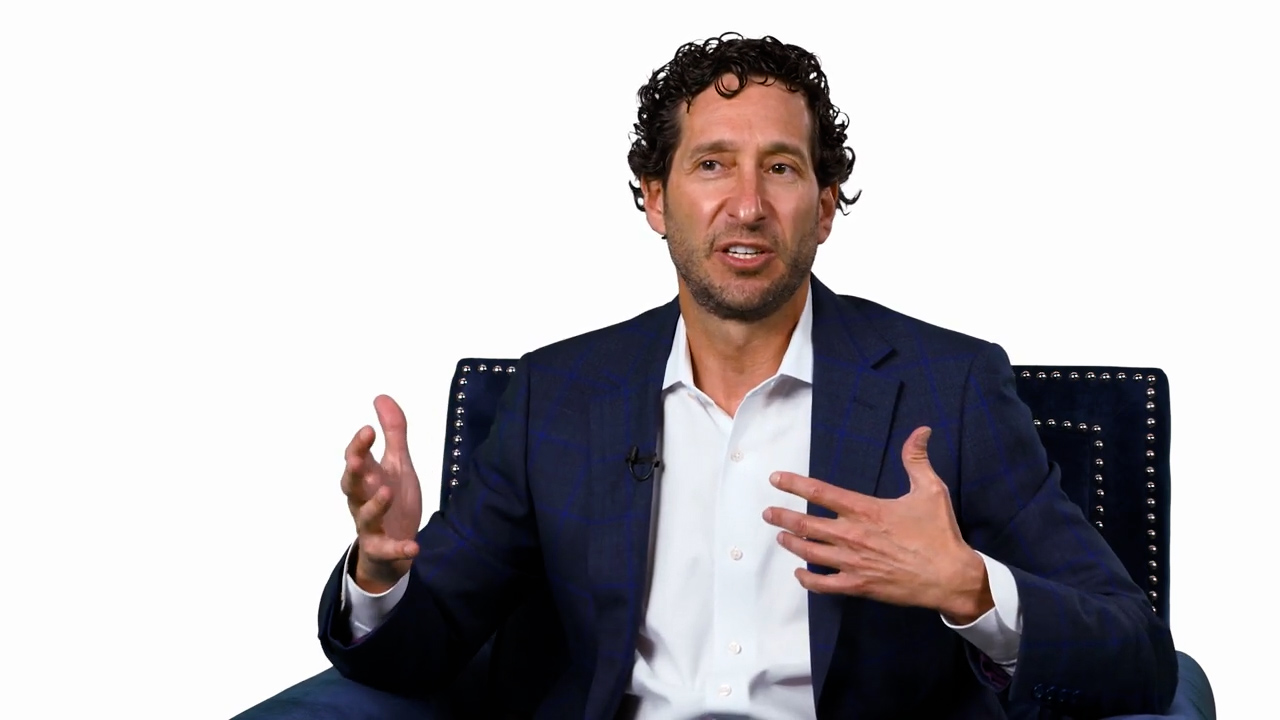
Nevada’s education system faces many challenges, and its K-12 schools consistently rank among the worst in the nation for proficiency levels in English and math, high school graduation rates, per-pupil funding and other measures. And, the state’s two largest school districts, Washoe County and Clark County, both lost their superintendents in February.
Dr. Jesus Jara, who had headed Clark County School District (CCSD) since 2018, resigned amid mounting criticism with no immediate successor named. When Dr. Susan Enfield of Washoe County School District (WCSD) left for personal reasons, she was the fifth superintendent at the organization since 2012. Dr. Kristen McNeill, who has spent almost 30 years in the district as teacher and administrator, was named WCSD’s interim superintendent, the third time she’s held that position.
Lack of funding has been consistently named as a major contributor to Nevada’s education woes. The per-pupil funding in Nevada is $10,073 compared to the national average of $14,295. The 82nd legislative session in 2023 passed the largest education budget in state history, allocating almost $12 billion in education funding over the biennium, a $2.6 billion increase.
“The state Legislature made an historic investment by increasing the per-pupil funding. It’s the most per-pupil funding our public schools have ever seen,” said McNeill. “In fiscal year 2023, Washoe County’s per-pupil funding was $7,318. In fiscal year 2024 it increased 26 percent to $9,243, and in 2025 it will increase to $9,705.”
The WCSD board has made a commitment to invest the additional funding in employees, said McNeill, with a significant percentage earmarked for employee compensation. “We’re investing in people over programs,” she said. “We have to improve student achievement, and we need to recruit and retain the teachers and staff members who will be able to do that. We’ve added positions, including campus monitors in high schools and deans in elementary schools. Cost-of-living increases were also sorely needed to keep up with inflation, and they were a long time coming.”
One aspect of the new funding is the Pupil-Centered Funding Plan, which allocates additional money to support students with special needs, such as English language learners, at-risk students and gifted and talented students. “Weighted student funding is so important,” said McNeill, “and one of the factors is English language learners. Eighty-three different languages are spoken in WCSD and students who don’t learn and speak English at home need more resources so they don’t get left behind.”
McNeill explained that WCSD is facing its challenges by implementing a three-year strategic plan adopted by the school board in 2022. Its five goals are: a strong start for every child through early childhood education, increasing student voice and advocacy, a sense of safety and belonging, academic growth and achievement and empowering all learners for their future, including career and technical education.
COVID Fallout and Mental Health
When K-12 schools were closed in 2020 during COVID, the Nevada Department of Education stopped its regular assessments of student progress. “What we saw when the schools reopened was a drop in proficiency, especially in math,” said McNeill. “We had expected that.”
Another effect of COVID closures, which could also have been expected, was an increase in the number of students of all ages reporting psychological problems. “When [Washoe County] schools reopened in the fall of 2020, things started to bubble up: isolation, trauma, even suicide,” said McNeill.
“We’re having a reckoning when it comes to what education looks like in a post-COVID environment,” said Dr. DeRionne Pollard, president of Henderson-based Nevada State University (NSU). “COVID amplified concerns about mental health that were already there. It brought into the light what was hidden. Dealing with mental health is a new competency in the work of higher education.”
Dr. Karin Hilgersom, president of Truckee Meadows Community College (TMCC), agreed with this assessment, saying: “We have a perfect storm. A whole generation of people have been raised with cell phones and social media – we’ve lost some of the human elements people need for mental health. This issue has been in the making for 20 years, but COVID made it worse.”
Educators throughout Nevada are now challenged with mental health issues in addition to English and math. “In a post-COVID world, we see a lot of stress, anxiety, depression, and loneliness,” said Dr. Keith Whitfield, president of University of Nevada, Las Vegas (UNLV). “That really has a detrimental effect on student success. As soon as the COVID closures began, UNLV increased counseling and psychological services programs. We’re also turning the focus from ‘mental health’ to ‘wellness’ so people will think of their mental health as an important component of their wellness. We started a student-led organization called Project Wellness, which is now one of the most popular groups on campus.”
Pollard said Nevada State University has enhanced mental health services for both students and employees and hired two clinical social workers. She noted that employees often need these services as much as students, so NSU has increased its workplace support programs. “Our employees are on the front lines responding to students who may be in crisis, and they may be experiencing a crisis of their own,” she said.
“Faculty are experts in their own field, but they also need training in how to recognize a student in crisis, how to deescalate a situation, and how to point a student and their family to resources that can help them”.
McNeill said WCSD has made a concerted effort to get the word out about mental health. “Just as you exercise and go to the gym, you need to take care of your mental health,” she explained. “It shouldn’t be a stigma and it’s okay to reach out. We have social workers and counselors in the schools and we can refer students to mental health professionals throughout the state.”
The Remediation Challenge
“Nationally, 70 to 80 percent of first-time students at community colleges who come from public high schools are not college-ready,” said Dr. Frederico Zaragoza, president of College of Southern Nevada (CSN). “And CSN sees this as well – about 70 percent are not prepared to do college course work.”
Although the need for remediation has existed for many years, the problem has accelerated since COVID closures, according to Hilgersom. “Students who had to deal with COVID closures are even less prepared,” she stated. “A whole group of students were forced to do online course work, and most were not prepared for that. You have to be an independent learner to succeed in that environment, and the majority of students are not ready for 100 percent remote learning. They need faculty, in person or at least in a hybrid setting.” She said math scores especially suffered.
Since English and math are the subjects that present the most challenges for high school graduates entering higher education, colleges and universities have devised a number of ways to bring them up to speed.
Zaragoza explained that the majority of community colleges have moved from the “sequential model” for remedial classes to a “co-requisite model.” In the sequential model, students who were not prepared for college work had to complete remedial courses before they could take regular classes for credit. “Many students never got out of the remediation phase,” he said. “In the co-requisite model for English and math classes, we allow students to take college courses, but while in those courses, they are given contextual support and tutoring to help bring them up to speed. We’ve seen a significant improvement in pass rates of these students since adopting this model a couple of years ago.”
Hilgersom said TMCC has redesigned its remedial courses so students can complete them faster. “For students who aren’t ready for college work, we offer English 100 and Math 100, but in a 5-credit model instead of 3,” she explained. “Once the course is complete, it’s the same as passing English 101 or Math 101.”
“We recognize that students show up at various entry points,” said Pollard. “Some students are college-ready and can move right into coursework that will lead them to a degree. Others come to us and ask for the co-requisite model. While taking a college level course they are also taking another set of courses that will help them reach their academic goals. Institutions like ours have developed multiple means to respond to students’ needs, however they show up to us.”
“We have a large percentage of students who are the first in their family to attend college,” said Whitfield. “It’s a big transition from high school to college. It’s not 13th grade.” Since one of the biggest challenges is math, UNLV offers a math bridge program that involves studying and tutoring. It’s a different approach to improving math skills, rather than taking a remedial class that doesn’t count toward a degree.
Brian Sandoval, president of University of Nevada, Reno (UNR), noted that higher education is often criticized for not doing enough to help students who aren’t prepared for college work. UNR offers co-requisite classes in both English and math. However, one innovative response has been for colleges and universities throughout the state to offer dual-enrollment classes for high school students. “At UNR, we’ve created a very robust dual-enrollment program,” said Sandoval. “Students are taking the exact same classes at their high schools that they would take at the university. They are being taught freshman-level English and math, and it’s been wildly successful. It’s gone from a few hundred students to 5,000 students in 28 high schools in several counties throughout Nevada. Almost all the high school students are performing as well as the on-campus students.” If students need extra help, co-requisite classes are also offered through this model.
Once students have completed the dual-enrollment course, they’ve proved that they’re college ready. “We focused on Title 1 high schools,” said Sandoval. “More than half our [dual-enrollment] students come from Title 1 schools and 70 percent of them come from diverse backgrounds. They get the same resources as on-campus students, including access to the library and to advisors. If they start early, they can already have college credit when they enroll in college.”
Developing a Trained Workforce
The presence of a trained workforce can be a major factor in a company’s decision to relocate to Nevada, which is a particular concern of economic development agencies tasked with diversifying the state’s economy. Nevada’s colleges and universities have seen an increased focus on workforce development, and it is even emphasized in high schools throughout the state, which offer programs in everything from aeronautics to culinary arts.
McNeill said WCSD has been a state leader in career and technical education for many years. All WCSD high schools offer career education through signature academies such as Damonte Ranch’s academy for the performing arts. In addition, the Academy of Arts, Careers and Technology (AACT) offers training in health services, early childhood education, culinary, business, and agriculture. The Debbie Smith Career and Technology Academy, a high school campus with its own signature career and technology programs, will open in the spring of 2025.
“Workforce development is actually part of the mission for community colleges. It’s an ongoing part of what we do,” said Zaragoza. “We want to make sure our programs are aligned to what our local community needs, and CSN may see different needs than TMCC.”
Hilgersom explained that there is a difference between workforce training and workforce development. “Workforce training is one subset of workforce development,” she said. “Universities do workforce development, but they tend to not do workforce training. For example, we have a lot of students majoring in pre-engineering. They take courses like chemistry and physics so they can transfer to UNR and enter the engineering program. That’s workforce development. Other students take courses to prepare them for jobs in manufacturing or the automotive industry. Those types of courses are workforce training, and credits for them don’t transfer to a university.”
Sandoval said, “UNR has been in the business of workforce development for 150 years. All our graduates go out into the workforce and 70 percent of them stay in Nevada. We work with the Governor’s Office of Economic Development (GOED) and the Nevada Office of Workforce Innovation (GOWINN). Companies like Switch and Tesla look for a particular type of employee, whether it’s logistical or industrial engineering, or something else. We try to be flexible in developing curriculums and classes that are geared toward our local industries.”
As a Research 1 university, UNLV provides students with practical experience that can translate into the workforce, said Whitfield, who added, “Everything is workforce. We believe in providing students with experiential learning, enabling students to learn skills like problem solving. Particularly in the tech industry, employers are looking for people who can solve problems, work on a team and communicate. We also offer practical experiences outside the classroom – for example, the President’s Innovation Challenge, an interdisciplinary group of students who get together to solve a big problem. In the Engineering College, we have a senior design competition where students can practice what they’ve learned. That’s what many employers want to see.” UNLV also partners with companies to offer internships, and Whitfield said many interns are offered a job after graduation.
Nevada State University focuses on high-demand roles that respond to the needs of local industries, said Pollard. NSU’s original pipeline was licensed professionals, chiefly in nursing and education. In its education programs, NSU has added more courses to address CCSD’s needs, such as bilingual education and early childhood education. In nursing, the university added a “night cohort” for people who work during the day.
“We listen to businesses and create new programs based on what our business partners tell us they need, and we’re proud that 80 percent of our graduates stay in Nevada,” she said. “We offer certificates for professionals to increase their value in their existing workplace. We also offer leadership training, an employer-driven program developed through an industry partner. Our cybersecurity program offers hands-on modules to help students get skills and credentials to help them move up in their present job or find new employment.” NSU also offers credit for prior learning in a program where students can earn college credit by the completion of a standardized credential test.
Partnering with local companies is a major component of workforce development initiatives. CSN has partnered with industry and the city of Henderson to build the Debra March Advanced Manufacturing Center of Excellence, which opened in Henderson in August 2023. This specialized training facility fulfills a need for high-skilled training in advanced manufacturing, which is playing an increasingly important part in southern Nevada’s economy. For example, Haas Automation is planning a 2.3 million-square-foot plant in Henderson to manufacture machine tools. Planned for completion in 2026, it will provide 3,000 to 4,000 manufacturing jobs.
Hilgersom said TMCC has advisory boards that help it stay relevant. “We meet frequently with industry partners,” she said. One example is Panasonic Preferred Partnership, in which TMCC created a certificate program based on what Panasonic needed. The Tesla Partnership provides a branded classroom at TMCC’s Edison campus and also funds a faculty member. “What we do in manufacturing is absolutely fantastic – a win-win for everyone,” she said.
“The bottom line is for us to remain relevant and follow trends in the local economy,” said Zaragoza, “Five years ago, our manufacturing programs were mainly designed to support the casino industry and assembly-type businesses. As southern Nevada’s economy continues to diversify, we’ve started to offer advanced manufacturing programs. Whether it’s increasing the number of slots for nurses because there’s a shortage, providing courses in cybersecurity because that’s so important now, or producing world-class technicians for manufacturers, we’ve aligned our programs to provide the skillsets that industry needs.”
Facing the Future
The University of Nevada, Reno is celebrating its 150th anniversary this year. UNR’s Sandoval summed up the challenges facing all Nevada schools, colleges and universities: “We can’t act like a land grant institution from 1874,” he said. “We need to meet the needs of a changing, thriving, and growing economy, both today and in the future.”
The Transformative Power of Education
By Brittany Barksdale
Nevada State University believes in the transformative power of education and prides itself on being an accessible educational resource in Southern Nevada. The phrase coined by President Dr. DeRionne Pollard, “Workforce development is economic development,” emphasizes Nevada State’s dedication to develop, educate, and empower Southern Nevada’s workforce in benefit of our entire community.
 The workforce development program at Nevada State University is a comprehensive learning experience designed to provide education, training, and skills development to members of the Southern Nevada community. Its range of programs includes the Scorpion STEAM Academy (SSA) for middle-school students, a cybersecurity program, and leadership development through the Nevada State Leadership Academy (NSLA).
Tom Nicholas, Director of Workforce Development, has seen firsthand how our programs provide participants with a well-rounded approach to advance in the workplace. He believes the effectiveness of each program highlights Nevada State’s commitment to serve and educate the community by providing multiple educational avenues to learn and grow.
According to Nicholas, “The workforce development program is more than another education course; it is a holistic approach to career development. Our role is to provide students with the tools they need to succeed in today’s dynamic job market both during and after they complete the program.”
Scorpion STEAM Academy (SSA): A Summer Exploration
Scorpion STEAM Academy is not another summer camp; it is an immersive experience that takes place on Nevada State’s campus. Students explore the world of science, technology, engineering, arts, and mathematics (STEAM) in a university setting. With hands-on activities that expose students to different career opportunities in STEAM.
During the SSA weekly program, students interact with leading industry professionals in their respective STEAM fields, who bring their knowledge and career experience to different in-class projects and lessons. The summer of 2023 marked the start of the first summer program and saw incredible success with the program having over 300 student participants.
Nevada State Leadership Academy (NSLA): Supervisor Bootcamp and the Leadership Academy
NSLA is composed of two micro-credential programs: The Supervisor Bootcamp and the Leadership Academy. Both programs utilize an employer-driven model of curriculum development and allow participants to add several specialty leadership areas to tailor the experience to their needs and interests, especially for those without higher education degrees. According to the US Census, only 26.1% of Nevada’s population ages 25 and older have earned a bachelor’s degree or higher.
For many seeking to advance their skill set, different obstacles can contribute for those unable to commit the time to earning an advanced degree. Nicholas highlights the importance of continuous learning for career advancement and sees his program as an alternative for those seeking to advance. “Not everyone can commit to several years of traditional education, but by participating in these workforce development programs, individuals can build their current skills and make themselves a more competitive candidate for advancing in their company.”
This past December, the program celebrated its first cohort to complete the program.
Nevada State Cybersecurity
Cybersecurity professionals are needed in today’s ever-evolving tech world. Nevada State’s multi-course, stackable certification program prioritizes hands-on skills and real-world learning, preparing students for career success. The program is tuition-free thanks to a partnership with Nevada Partners and the Supporting and Advancing Nevada’s Dislocated Individuals (SANDI) grant from the Governor’s Office of Economic Development.
“Our industry partnerships and grants provide valuable insights, resources, and connections that enhance the quality of our programs and increase the likelihood of job placement for graduates,” Nicholas said.
President Pollard believes that Nevada State has redefined what it means to be part of the higher education space. “Our investment in our community through this work is part of our continued effort to promote economic mobility for the diverse southern Nevada community. Designed with our students in mind, this program hopes to empower community members in knowing that it is never too late to continue learning.”
Nevada State University’s workforce development programs are more than educational experiences; they open doors to new opportunities for people seeking to advance in their respective careers. “By participating in our programs, you’re not only gaining knowledge; you’re investing in your future and the future of our community,” Nicholas said.
To apply or learn more about Nevada State University’s workforce development programs, contact us:
Email: workforce@nevadastate.edu
Phone: 702.992.2508
Website: workforce.nsc.edu/